
Location and Builder
The 2026 HGTV Smart Home is located in Orlando, Florida. Built by Hartizen Homes, the property serves as a resort-inspired retreat that blends thoughtful technology with curated design. It functions as a practical benchmark for what standard new construction can achieve when smart technology is integrated during the framing and electrical phases rather than bolted on later.
Property Details and Layout
The residence is a 4-bedroom, 3.5-bath home featuring a first-floor primary suite, a private study, and a spacious loft. The exterior includes a split 3-car garage and a 32-foot covered lanai, providing ample space for both indoor and outdoor living.
Tech Features
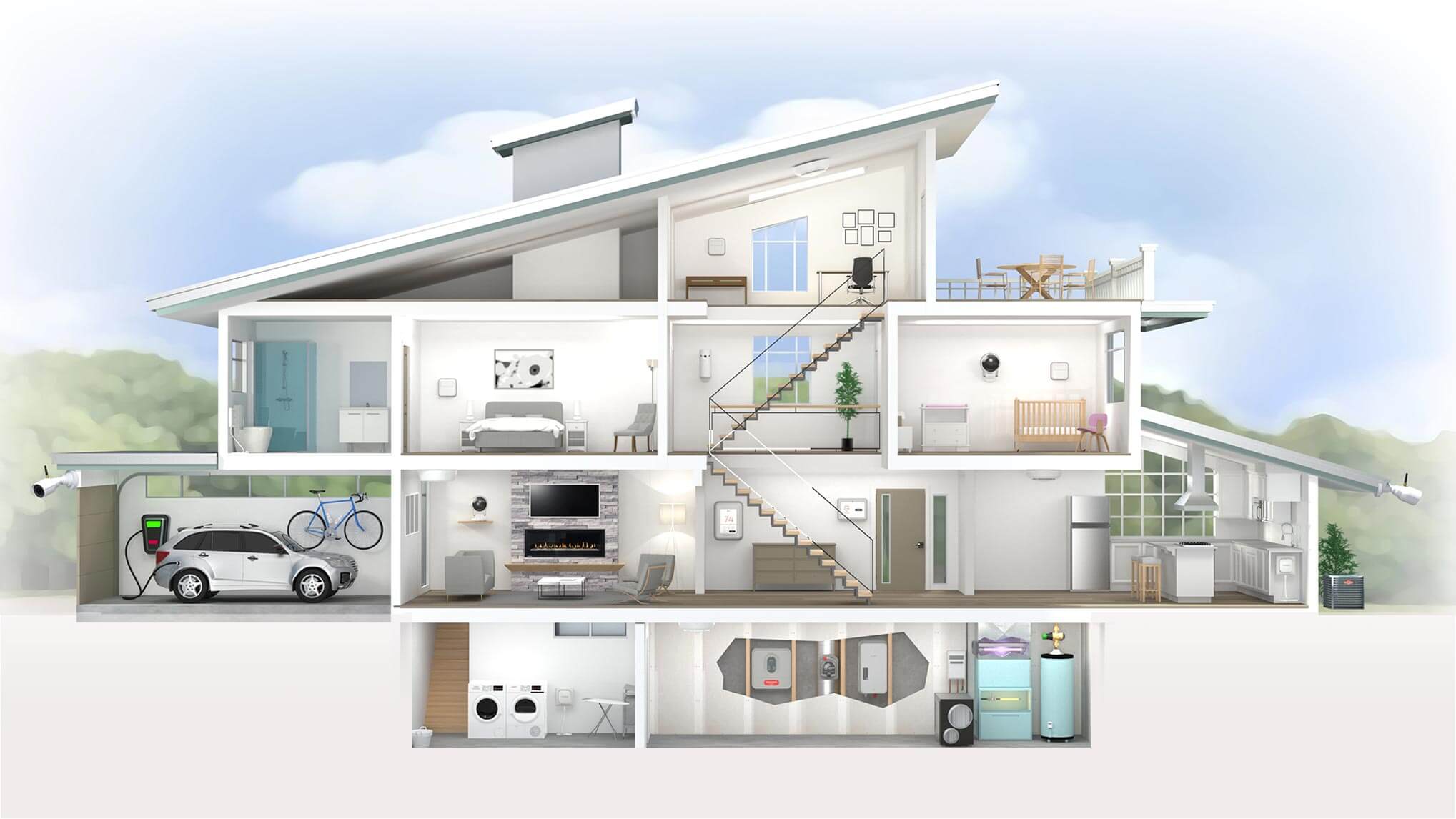
The property moves beyond scattered gadgets to offer a unified, whole-home automation ecosystem. This integration creates a baseline for energy efficiency by adjusting settings based on occupancy and time of day.
Core Automation and Control
At the center of the home is a dedicated smart home hub that orchestrates lighting, climate, security, and entertainment. Instead of relying on individual app controls for every device, residents use a single interface to manage the entire environment. This reduces digital clutter and ensures that automations—like turning off all lights when leaving the house—trigger reliably.
The system supports voice commands through major assistants, allowing for hands-free control of everything from blinds to thermostats. This integration is not just about convenience; it creates a baseline for energy efficiency by adjusting settings based on occupancy and time of day.
Energy Management and Sustainability
The home features advanced energy monitoring that tracks consumption in real time. Smart panels and connected appliances provide detailed insights into usage patterns, helping homeowners identify inefficiencies. This data-driven approach allows for proactive adjustments, such as shifting high-energy tasks to off-peak hours or optimizing HVAC cycles based on weather forecasts.
Solar readiness is built into the electrical infrastructure, with conduit pathways and panel capacity designed to support future solar panel installations. This forward-thinking design ensures the home can adapt to changing energy needs and regulations without major retrofitting.
Security and Access
Security is handled through a layered approach that combines physical hardware with digital monitoring. Smart locks with temporary access codes allow for secure entry for guests or service providers without the need for key exchanges. These locks integrate with the main hub to log entry and exit times, providing a clear audit trail of activity.
Video doorbells and indoor cameras feed into a central monitoring system, accessible via mobile devices. The system includes motion detection and AI-driven alerts to distinguish between people, animals, and vehicles, reducing false alarms and ensuring that residents are notified only of relevant events.
Entertainment and Connectivity
Whole-home audio and video distribution allows for seamless entertainment throughout the property. High-speed Wi-Fi 6E mesh networks ensure strong, consistent connectivity in every room, supporting multiple devices and 4K/8K streaming without buffering. This infrastructure is critical for a smart home, as it provides the bandwidth needed for IoT devices to communicate without lag.
The property demonstrates that smart technology is no longer a luxury add-on but a foundational element of modern living. By integrating these systems from the start, the home offers a level of convenience, efficiency, and security that is increasingly becoming the expected standard for new homes.
Winner Selection Process
The winner of the HGTV Smart Home is determined by a randomized drawing. Unlike a contest based on merit, design, or prior entries, this is a pure sweepstakes. The selection process relies entirely on chance, meaning every valid entry has an identical probability of securing the property and its contents.
HGTV typically announces the winner through a live drawing event. These broadcasts are often streamed on HGTV’s social media channels and website. The winner is notified directly via phone or email shortly after the drawing concludes. Participants should monitor official HGTV announcements for the specific date and time of the draw.
Winning includes the property itself, along with a suite of high-end smart home technology, vehicles, and cash prizes. The exact inventory varies by year, but the 2026 iteration features the latest in home automation and luxury amenities. Winners must comply with IRS regulations and pay taxes on the prize value.
To enter, participants must be U.S. residents aged 18 or older. Entries are submitted through the official HGTV Smart Home website. The entry period usually opens in early spring and closes in late summer. Always verify the official rules on HGTV’s site to ensure your entry is valid and compliant with all state-specific regulations.
Key Automation Trends
The Orlando property offers a clear view of where home automation is heading. Rather than focusing on gimmicky gadgets, the property emphasizes integration and efficiency. The design treats technology as an invisible layer that supports daily life, not as the main event. This shift marks a departure from the early smart home era, where visibility often trumped utility.
A major trend in energy-efficient home upgrades is the move toward holistic systems. The Orlando property features centralized management for lighting, climate, and security. Instead of relying on disparate apps, residents use a single interface to monitor energy usage and adjust settings. This approach reduces friction and encourages sustainable habits by making efficiency the default state.
Security remains a priority, but the methods have evolved. The home utilizes encrypted communication between devices and local processing for sensitive data. This minimizes the risk of cloud-based breaches and ensures that critical functions, like door locks or surveillance feeds, remain operational even during internet outages. Security is no longer just about cameras; it is about data integrity and system resilience.
The integration of artificial intelligence in home automation has also matured. Devices now learn user preferences over time, adjusting temperature and lighting without explicit commands. This predictive capability reduces energy waste and enhances comfort. The goal is a home that anticipates needs rather than waiting for instructions.
The 2026 home demonstrates that true security lies in local processing and encrypted local networks, rather than relying solely on cloud connectivity for critical functions.
These trends suggest that the future of home automation is about subtlety and reliability. Buyers should look for systems that prioritize seamless integration and energy savings over flashy features. The technology should enhance the living experience without demanding constant attention or maintenance.
No comments yet. Be the first to share your thoughts!