

Sustainable home tech 2026 budget
The to Sustainable Home Tech works best when the purchase path is explicit. Verify the source, compare the offer against real alternatives, check the total cost, and confirm what happens after payment before you decide. After each comparison, write down the one risk that would change your mind. If the seller, condition, support, warranty, shipping, or upkeep still feels uncertain, resolve that question before moving to checkout.
The simplest way to use this section is to verify the seller, compare the total cost, and resolve the biggest risk before you commit.
Shortlist real options
The 2026 smart home landscape prioritizes unified ecosystems and energy awareness. Matter 1.5 has smoothed interoperability, allowing devices from different manufacturers to communicate without proprietary hubs. This shift reduces e-waste and lowers installation friction for homeowners seeking sustainable upgrades.
We evaluated the strongest sustainable home tech options based on energy efficiency, integration capabilities, and long-term durability. The following comparison table highlights four top-rated devices that balance performance with environmental responsibility.
| Product | Category | Key Feature | Integration |
|---|---|---|---|
| Ecobee Smart Thermostat Premium | Climate Control | Room sensors for precise zoning | Matter, Alexa, Google Home |
| Lutron Caseta Smart Bulb Dimmer | Lighting | Low-voltage reliability, no hub needed | Matter, Lutron App |
| Shelly Plus Plug S | Smart Plug | Real-time energy monitoring | Matter, Shelly Cloud |
| Nanoleaf Essentials Bulb | Lighting | Tunable white with sleep cycles | Matter, HomeKit, Google Home |
Each device selected here addresses a specific pain point in home energy management. The Ecobee thermostat uses room sensors to eliminate hot and cold spots, reducing HVAC runtime by up to 23% according to independent studies. Lutron’s dimmers offer a robust, hub-free solution for lighting control, which remains the most accessible entry point for sustainable home tech.
For plug-in appliances, the Shelly Plus Plug S provides granular energy tracking, helping users identify phantom loads. Nanoleaf’s bulbs focus on circadian rhythm support, using warm-to-cool tuning to reduce evening screen fatigue while maintaining efficient LED output. These tools form the backbone of a modern, eco-conscious smart home.
Inspect the expensive parts
Smart home devices are cheaper than ever, but a single failed component can still cost hundreds to replace. The goal of this inspection is to identify the high-stakes failure points before they drain your budget or damage your property.
Check the wiring behind smart panels
Smart electrical panels and hub gateways are the brain of your sustainable home tech. If the wiring inside is loose or the thermal management is poor, the unit can overheat. Inspect the access panel for discoloration or burning smells. Ensure the device has adequate airflow and isn't stuffed into a cramped utility closet.
Inspect outdoor sensor durability
Outdoor cameras and environmental sensors face the harshest conditions. Look for cracked housings or corroded mounting brackets. Water ingress is the leading cause of premature failure in these devices. Check the seals around lens covers and battery compartments. A cracked seal means the next rainstorm will short-circuit the board.
Verify battery health in critical sensors
Wireless sensors rely on lithium batteries. As they age, voltage drops can cause false negatives, leaving your security or energy monitoring blind. Check the battery percentage in the app monthly. Replace coin-cell batteries in door/window sensors annually, even if they appear functional, to prevent sudden data loss.
Test smart thermostat calibration
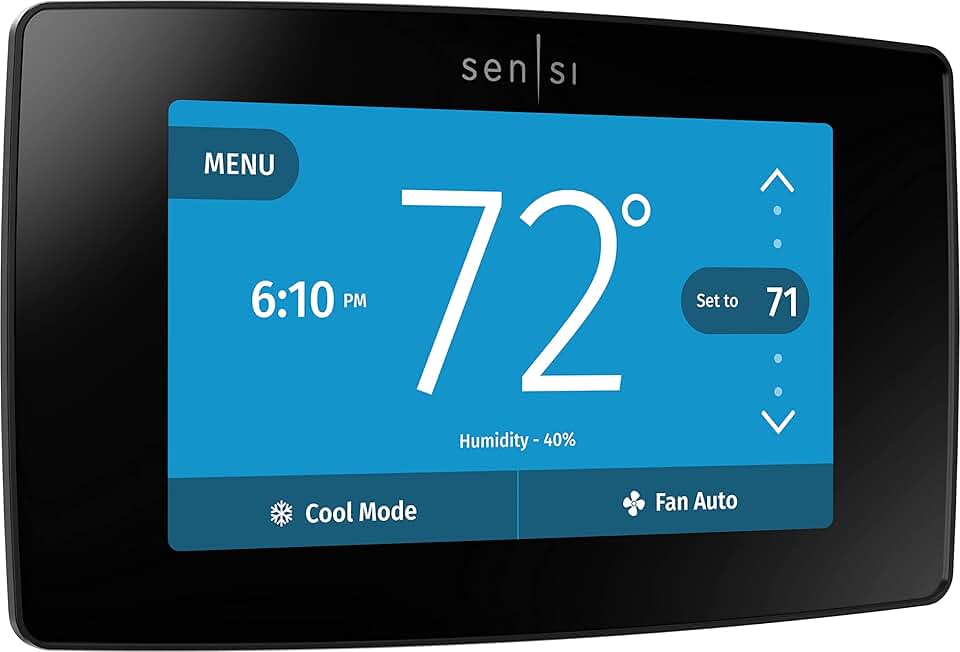
Thermostats are the most active device in a smart home. If the internal temperature sensor drifts, your HVAC system will cycle unnecessarily, wasting energy. Compare the thermostat reading with a standalone digital thermometer in the same room. If the difference exceeds two degrees, recalibrate or replace the unit to maintain efficiency.
Plan for ownership costs
A smart thermostat or sensor might look affordable on a storefront, but the real cost of sustainable home tech often hides in the long tail of ownership. The cheapest hardware can become the most expensive option if it demands frequent battery replacements, proprietary subscriptions, or early replacement due to software abandonment. When evaluating devices, look beyond the sticker price to the total cost of operation over three to five years.
Maintenance surprises are the silent budget killers. Smart locks with complex motor mechanisms may jam in winter, requiring professional service or unit replacement. Wireless sensors that rely on non-rechargeable batteries can cost more in annual replacements than the device itself. Always check the expected battery life and whether the device supports rechargeable or standard readily available cells before buying.
Subscription traps also inflate costs. Some energy monitors or security cameras lock advanced analytics or cloud storage behind monthly fees. If a device requires a recurring payment to function at its basic level, it stops being a smart investment quickly. Choose devices that offer core functionality without mandatory subscriptions to keep your utility bills and tech bills separate.


As an Amazon Associate, we may earn from qualifying purchases.
Sustainable home tech 2026: what to check next
Before investing in smart energy devices, it helps to understand how the landscape has shifted. The focus in 2026 is less on standalone gadgets and more on unified, energy-aware systems that cut bills through automation.
No comments yet. Be the first to share your thoughts!