Get ai career trends 2026 right
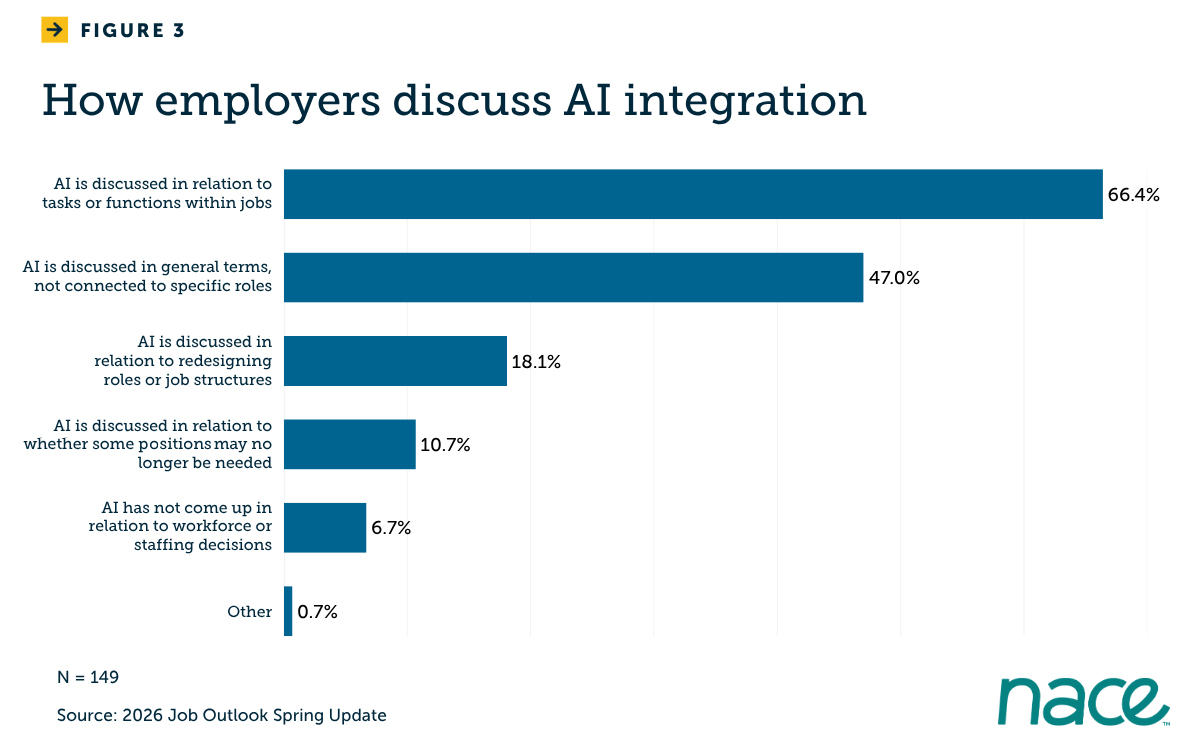
Before you pivot your career, you need to separate the hype from the actual market shifts. The narrative that AI is simply "taking jobs" is outdated. According to a 2026 model by Boston Consulting Group, 50% to 55% of US jobs will be reshaped by AI in the next few years, not eliminated. This reshaping means your role will likely change, requiring new skills rather than just a new job title.
To prepare effectively, start by auditing your current workflow for automation potential. Identify tasks that are repetitive, data-heavy, or rule-based. These are the areas where AI tools like LLMs and automated agents can take over. By offloading these tasks, you free up time for higher-value work that requires human judgment, creativity, or complex problem-solving.
Next, look at the data. The Stanford HAI 2026 AI Index shows that AI-related skills now appear in 2.5% of all US job postings, a 297% increase over the past decade. This isn't just for engineers. Marketing, HR, and operations roles increasingly list AI proficiency as a core requirement. You don't need to build models, but you must know how to use them to augment your output.
Finally, focus on the skills AI struggles with. Roles in healthcare, skilled trades, and complex strategic leadership remain resilient because they require physical presence, nuanced emotional intelligence, or high-stakes accountability. Your goal isn't to compete with AI on speed, but to collaborate with it on depth.
Work through the steps
Building a resilient career isn't about outrunning AI; it's about positioning yourself where human judgment and complex problem-solving remain the bottleneck. This sequence helps you audit your current role, identify high-value skills, and integrate tools that amplify your output without creating dependency.
Map your weekly tasks. Identify which activities are repetitive, rule-based, or purely informational. These are the first to be automated. If you spend more than 10 hours a week on data entry, basic reporting, or scheduling, you are currently subsidizing a task that software can likely handle better. Mark these as "vulnerable" and prepare to delegate or automate them using existing tools like Zapier or native AI features in your software stack.

Look at the jobs you want to keep and what they require. According to the 2026 AI Index, AI-related skills now appear in 2.5% of all US job postings, a 297% increase over the past decade. This doesn't mean you need to become a coder. It means you need "AI literacy": the ability to prompt, evaluate, and integrate AI outputs into your specific field. Focus on skills like critical analysis, ethical judgment, and complex communication—areas where AI still struggles with nuance and accountability.

Don't use AI to do the work; use it to draft, organize, or analyze. For example, if you're a marketer, use AI to generate ten headline options, but write the final copy yourself. If you're in finance, use it to summarize earnings calls, but perform the final risk assessment. Establish a "human-in-the-loop" rule: never send an AI-generated output to a client or stakeholder without your direct review and signature. This protects your reputation and ensures quality.
Generalists are most vulnerable to automation. Specialists who understand the intersection of AI and a specific industry are in demand. If you're in healthcare, learn how AI diagnostic tools work. If you're in law, understand AI contract review software. Become the person who can bridge the gap between technical AI capabilities and business needs. This makes you indispensable because you speak both languages.
Resilience requires sustainability. AI can create an expectation of 24/7 availability and rapid iteration. Set clear boundaries around when you engage with AI tools. Schedule specific times for deep work without digital interruptions. Remember that AI is a tool, not a replacement for your rest and recovery. Burnout makes you less effective than any AI system, so prioritize your mental health as a career asset.
-
Identified 3 repetitive tasks to automate
-
Completed one AI literacy course in my field
-
Established a 'human-in-the-loop' review process
-
Defined my niche specialization
-
Set boundaries for AI tool usage
Common mistakes that derail AI career resilience
Transitioning to an AI-augmented workflow often feels like a quick fix, but several recurring errors can actually reduce your output quality and increase burnout. The goal isn't to replace yourself with a tool, but to build a system where the tool handles the drudgery while you retain strategic control. Below are the specific pitfalls that cause poor outcomes and how to correct them.
Mistake 1: Treating AI as a replacement, not a lever
Many professionals try to outsource their entire role to a single prompt. This approach fails because current models lack the contextual continuity and accountability required for complex, long-haul projects. When you treat AI as a replacement, you lose the feedback loop necessary for quality control. Instead, use it as a lever: let it draft the outline, summarize the data, or generate the boilerplate code, but keep the critical thinking and final integration in your hands. This preserves your professional value and ensures the output aligns with your specific standards.
Mistake 2: Ignoring the "reshaping" reality
A common error is assuming AI will simply eliminate or create jobs in a binary way. Research from the Boston Consulting Group indicates that over the next two to three years, 50% to 55% of jobs in the US will be reshaped rather than replaced entirely. This means the core responsibilities of most roles will change, requiring new skills rather than just new tools. If you ignore this shift, you might find yourself mastering a tool that is becoming obsolete while the actual job requirements evolve around you. Focus on adapting your existing skill set to work alongside AI, rather than trying to compete with it on pure speed or volume.
Mistake 3: Overlooking the skills gap
Another frequent mistake is assuming that technical proficiency with AI tools is enough. The Stanford HAI 2026 AI Index found that AI-related skills now appear in 2.5% of all US job postings, a 297% increase over the past decade. This surge highlights a significant gap in the workforce. Many professionals focus only on the technical aspect—how to use the software—while neglecting the critical thinking and ethical judgment required to apply it effectively. To stay resilient, you must develop a hybrid skill set that combines technical literacy with domain expertise and human-centric problem solving. This combination is what employers are increasingly seeking, as it ensures that AI is used responsibly and effectively within the broader business context.
Ai career trends 2026: what to check next
Before committing to a new path, it helps to separate hype from the actual labor market data. The shift isn’t about total replacement; it’s about adaptation. According to a Boston Consulting Group analysis, AI will reshape 50% to 55% of US jobs over the next few years, meaning most roles will change more than they disappear [src-serp-1].
Here are the practical answers to the most common questions about navigating this transition.
No comments yet. Be the first to share your thoughts!