
Start with ai career trends 2026
Use this section to make the AI Career Shift decision easier to compare in real life, not just on paper. Start with the reader's actual constraint, then separate must-have requirements from details that are merely nice to have. A practical choice should survive normal use, maintenance, timing, and budget. If a recommendation only works in an ideal situation, call that out plainly and give the reader a fallback path.
The simplest way to use this section is to write down the must-have criteria first, then compare each option against those criteria before weighing nice-to-have features.
5 Non-Technical Roles That Are Booming
AI automation is reshaping the job market, but it is creating demand for roles that require human judgment, empathy, and strategic oversight. These five non-technical positions are seeing significant growth in 2026, offering stable career paths that complement rather than compete with AI tools.
-

AI Compliance and Ethics Officer
Companies deploying generative models face mounting regulatory scrutiny under the EU AI Act and emerging US guidelines. This role audits algorithmic bias, ensures data privacy, and manages liability risks. Professionals need a background in law or public policy, combined with technical literacy to understand model outputs. It is a critical gatekeeper position that prevents costly fines and reputational damage by embedding ethical safeguards directly into the AI development lifecycle. -

Prompt Engineering Specialist
Prompt engineering has evolved from novelty to necessity as enterprises scale AI integration. Specialists craft precise instructions to optimize Large Language Model outputs for specific business tasks, reducing hallucination rates. This role requires deep understanding of context windows, token limits, and chain-of-thought reasoning. While foundational prompting may become automated, complex workflow orchestration and iterative refinement remain human-dependent skills that drive tangible ROI in customer service and content generation pipelines. -
AI Training Data Curator
Garbage in, garbage out remains the cardinal rule of machine learning. Data curators collect, clean, and label the specialized datasets required to fine-tune domain-specific models. This role demands meticulous attention to detail and knowledge of annotation guidelines to ensure high-quality training inputs. As businesses move away from generic base models, the value of proprietary, well-curated datasets increases, making this role essential for achieving competitive advantage in accuracy and relevance. -
Technical Product Manager
Technical product managers bridge the gap between engineering teams and business stakeholders in AI-driven projects. They define product roadmaps that balance innovation with feasibility, translating complex model capabilities into user-centric features. Success requires understanding API limitations, latency constraints, and integration patterns. This role is pivotal in ensuring that AI tools solve real user problems rather than serving as novelty gadgets, driving adoption through practical, reliable, and scalable product experiences. -

AI Customer Success Manager
As AI tools become more complex, customers need guidance to achieve desired outcomes. AI Customer Success Managers monitor usage patterns, identify friction points, and provide strategic advice on optimizing AI workflows. They act as trusted advisors, helping clients navigate model updates and integration challenges. This role combines technical support with relationship management, ensuring high retention rates by demonstrating clear value and helping customers overcome the steep learning curve associated with new AI technologies.
Pick the right fit
Choosing a non-technical role in the AI era means looking for work that sits between human judgment and machine speed. The goal isn't to compete with AI on data processing, but to use it as a lever for tasks that require empathy, strategy, or nuanced communication. A good fit aligns your natural strengths with the specific gaps AI creates in the workplace.
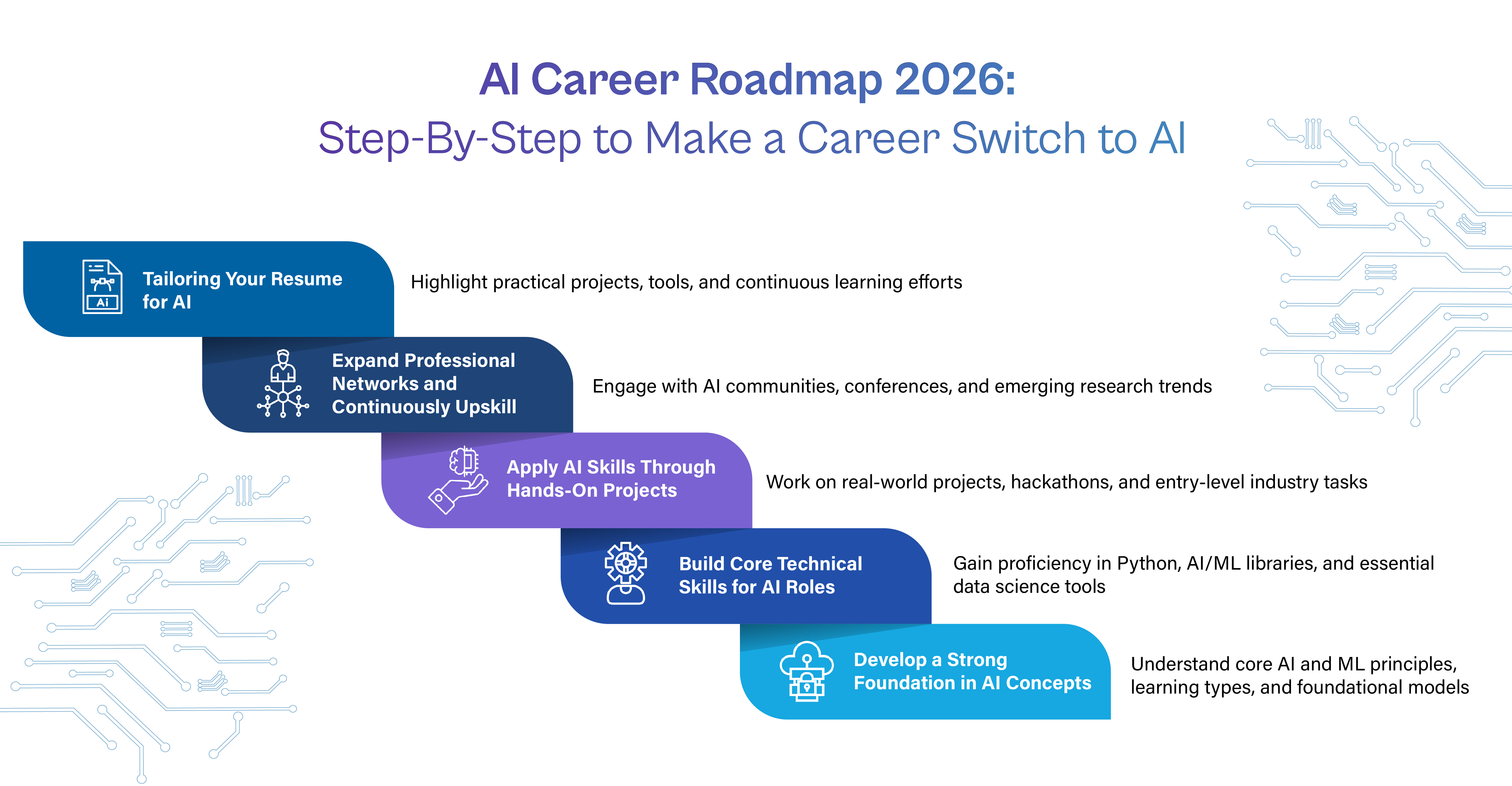
Use this three-step framework to evaluate where you fit. Each step helps you narrow down the five booming roles we listed earlier.
Identify where you spend most of your time. Are you managing people, writing content, analyzing data, or coordinating logistics? If your current role already involves heavy communication or complex problem-solving, you are closer to a non-technical AI role than you think. Look for tasks that AI can automate, leaving you to handle the exceptions and relationships.
AI struggles with context, ethics, and human connection. If you excel at reading a room, negotiating deals, or explaining complex ideas simply, you have a strong advantage. Roles like AI Ethicist, Customer Success Manager, or Technical Writer thrive because they require interpreting AI output in a human context. Choose a path where your "soft" skills are actually your hard assets.

Before making a leap, try using AI tools in your current job. Can you use an LLM to draft a marketing plan? Can you use data visualization tools to present sales trends? If you enjoy the process of guiding the AI and refining the output, you are likely suited for roles like AI Project Manager or Operations Analyst. This trial run builds confidence and concrete examples for your resume.
To help you visualize how these roles differ, here is a quick comparison of the key skills and daily focus for each path.
| Role | Primary Focus | Key Skill |
|---|---|---|
| AI Project Manager | Execution & Coordination | Agile Methodology |
| Technical Writer | Clarity & Documentation | Simplifying Complexity |
| Customer Success Manager | Retention & Growth | Empathy & Communication |
| Data Analyst | Insights & Trends | Data Storytelling |
| AI Ethicist | Compliance & Safety | Critical Thinking |


As an Amazon Associate, we may earn from qualifying purchases.
Once you identify a potential fit, focus on building a portfolio that demonstrates your ability to work with AI, not just on it. Employers are looking for proof that you can integrate these tools into real-world workflows effectively.
No comments yet. Be the first to share your thoughts!